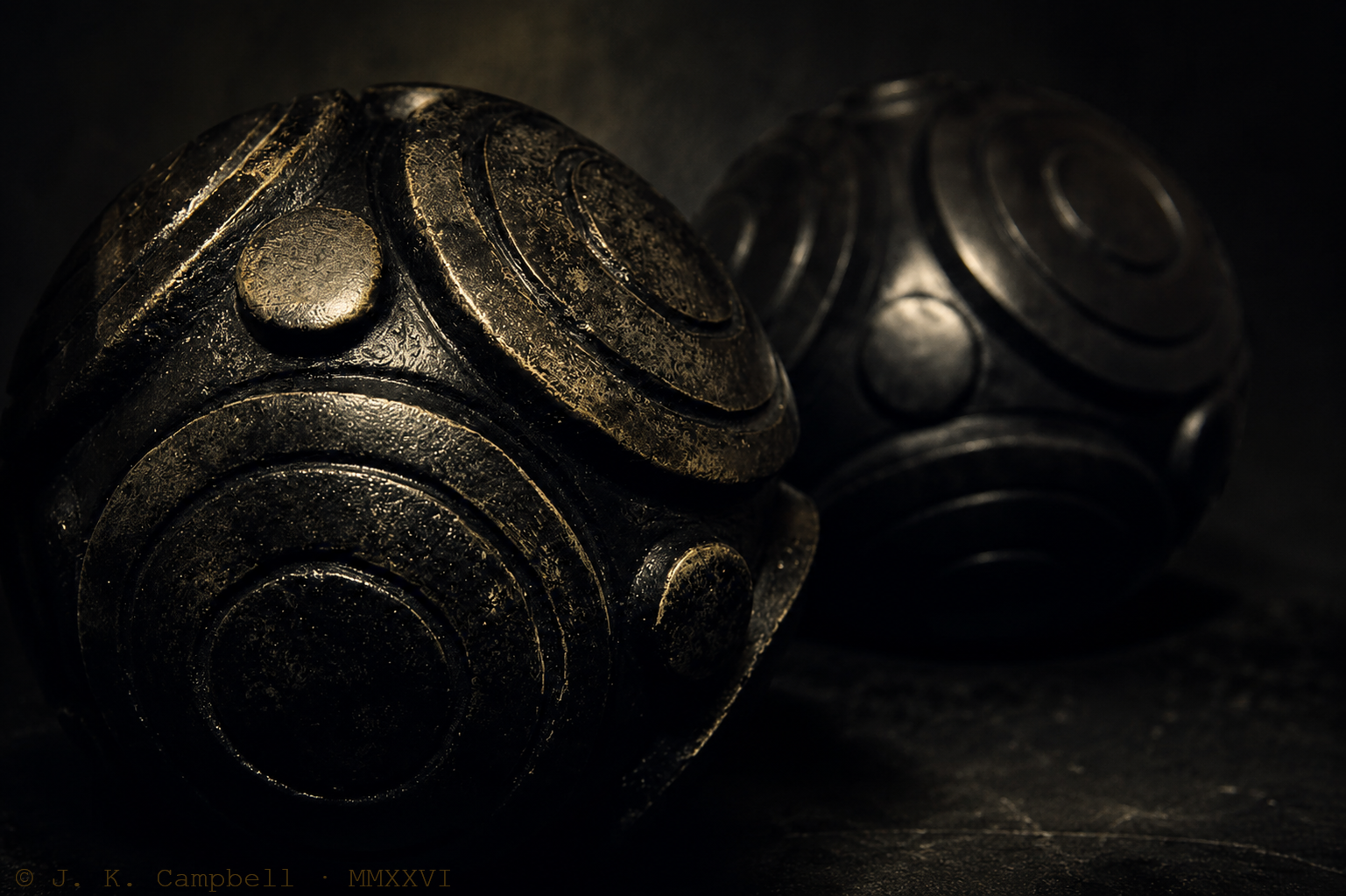
PETROSPHERES
Sculptor J. K. Campbell
Medium Concrete
Dimensions Variable, approx. 100mm diameter
Date c. 2019–ongoing
Series Ongoing unique variations
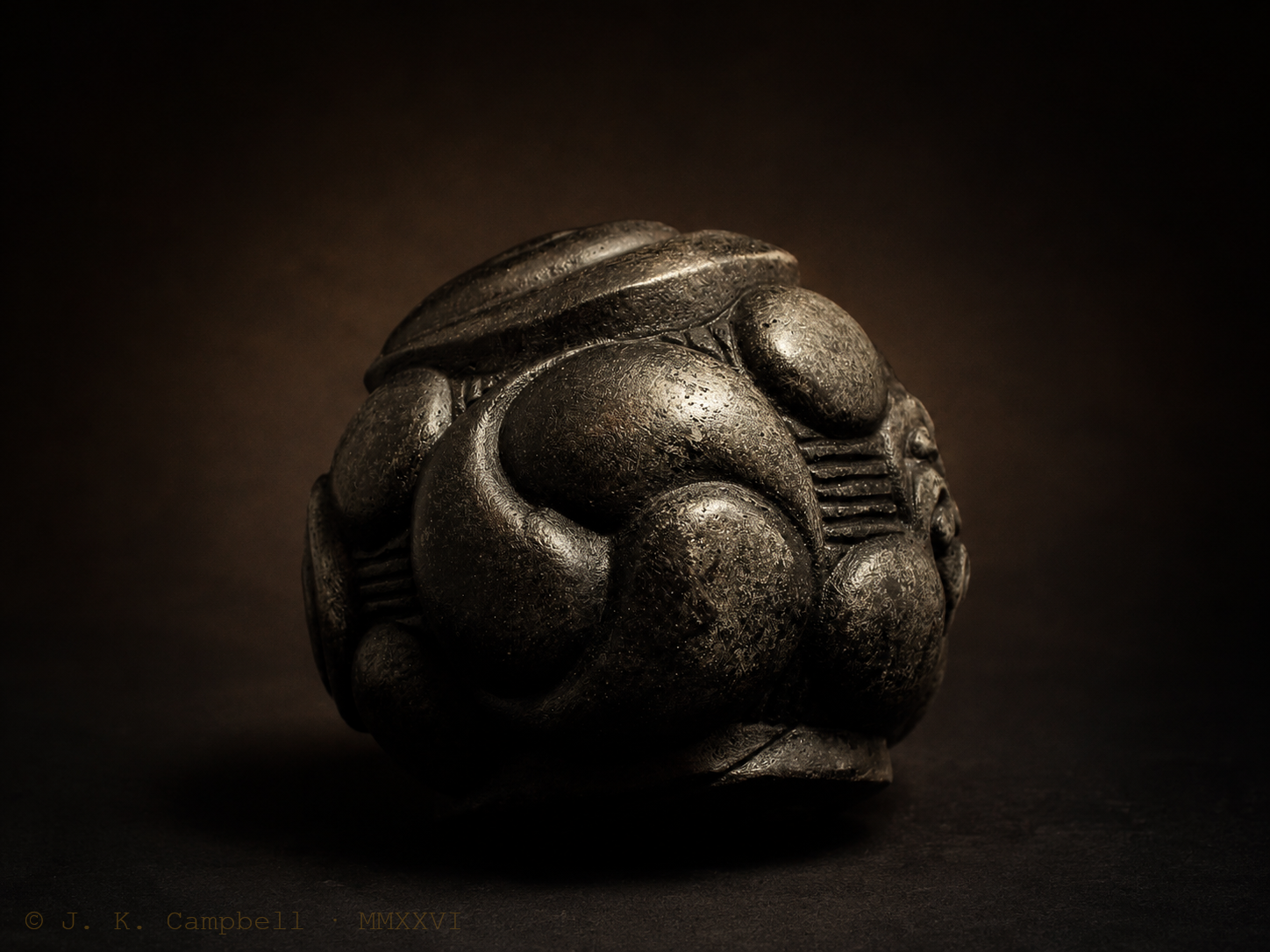
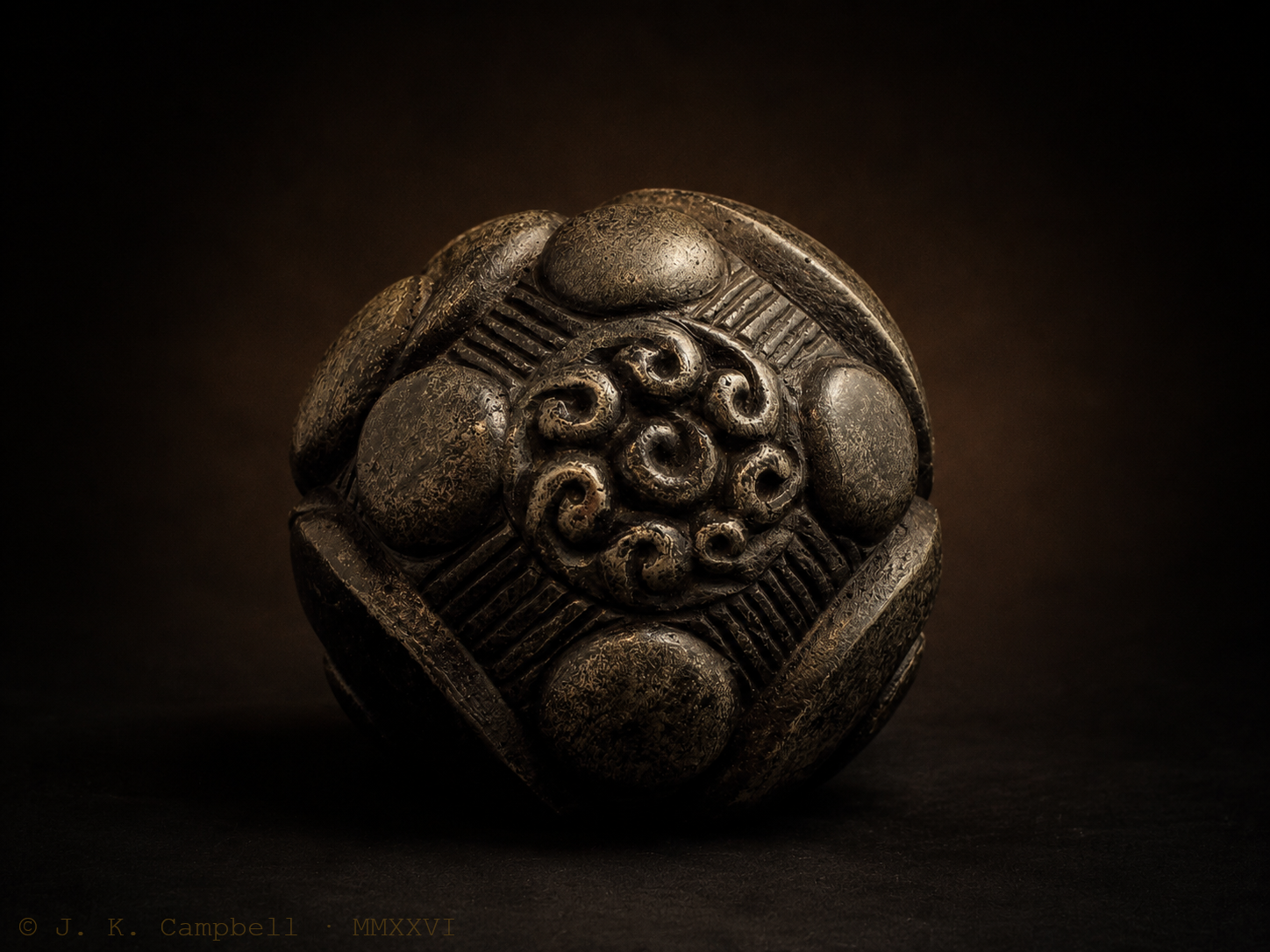
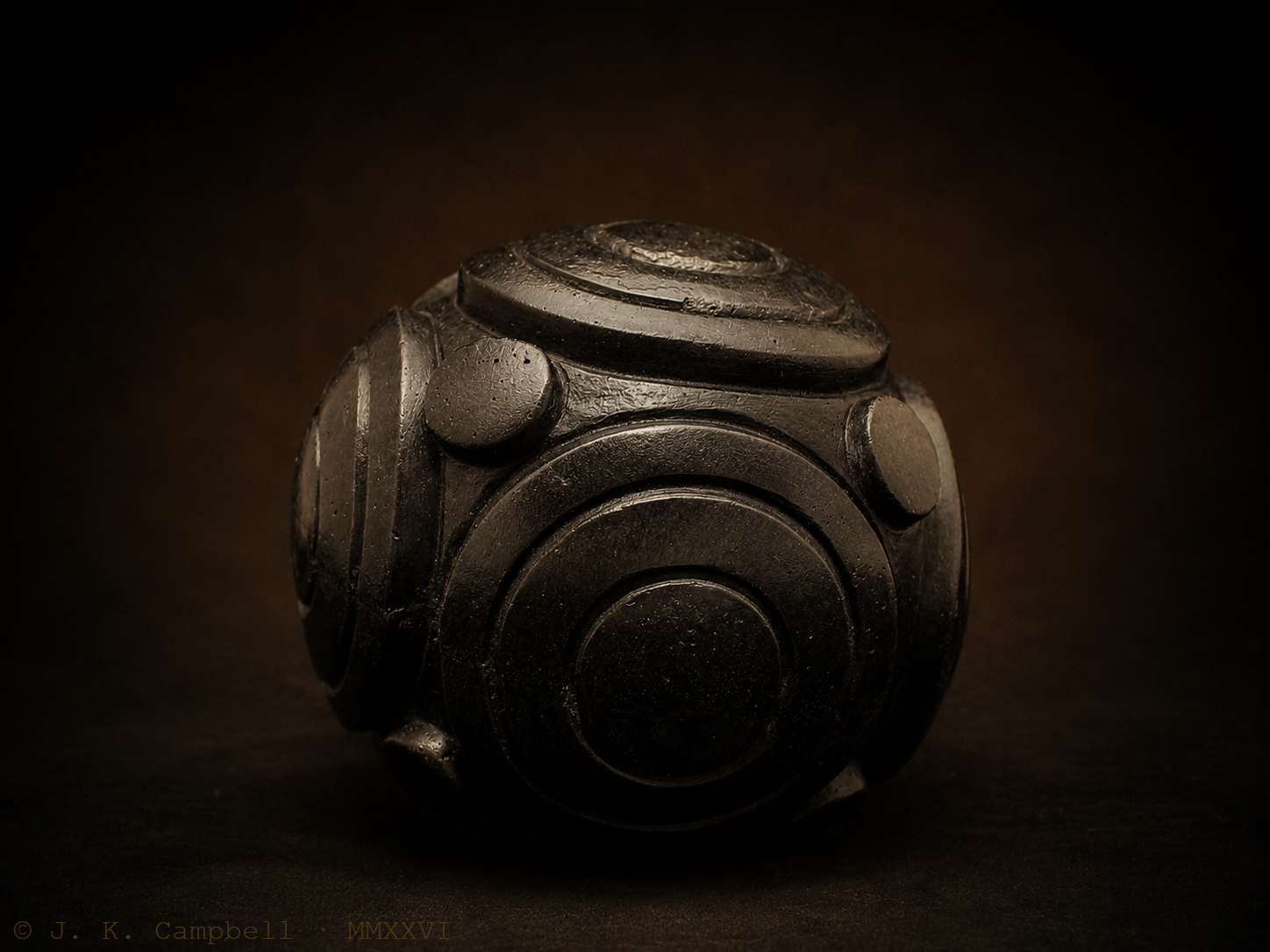
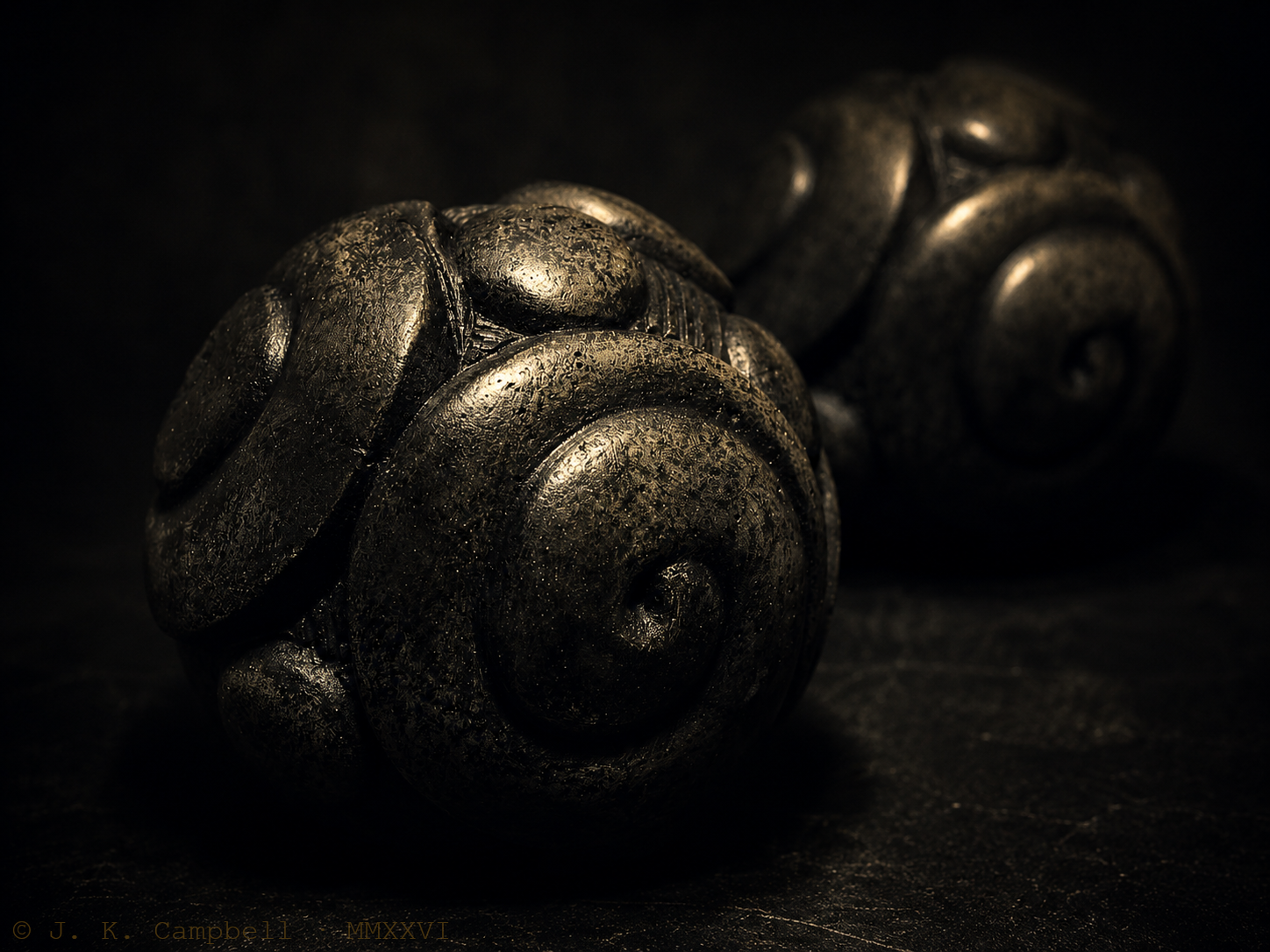
Petrospheres are an ongoing series of haptic litho sketches: small sculptural hand-objects understood through touch as much as sight. They are made to be held, turned, felt, looked at, and returned to. Their weight, balance, surface, and scale are central to the work.
The series began partly through an interest in the Japanese practice of forming and polishing clay spheres, often known as dorodango. The quiet repetition of that process — shaping, smoothing, refining, and concentrating attention into a simple spherical form — stayed with me. But the deeper pull came from much older sources: standing stones, carved stone balls, engraved surfaces, and the ancient human urge to leave a mark in nature.
Standing stones have always drawn me in, wherever they are found. They are simple, silent, and difficult to reduce to explanation. A stone raised upright in the landscape carries weight, intention, memory, and mystery without needing to speak. The same feeling exists in petrospheres and other ancient hand-held forms. Their original purpose may remain uncertain, and perhaps that uncertainty is part of their strength.
I do not usually begin these objects with drawings or fixed plans. They are closer to three-dimensional sketches: forms worked out while sitting, listening, talking, or simply letting the hand move while the mind is elsewhere. In that sense they are a kind of sculptural doodling — closer to someone knitting while watching television and speaking to whoever is in the room than to a carefully planned studio design.
The same feeling exists in found stones. Sometimes a stone is picked up simply because it feels right in the hand — because of its shape, weight, surface, or the way it settles into the palm. Often it is the shape that attracts first. Then the smoothness of the surface creates the urge to work into it, to intervene, to bring something more out of it. Before an object is explained, classified, or given meaning, it can already be understood physically.
The Petrospheres are roughly cannonball-like in scale, around 100mm in diameter. Though small enough to hold, they are not light objects. Their compact density is part of the work. A good tool, a smooth stone, a carved handle, a hammer, a knife, an old weight — all have that immediate authority in the hand. These spheres belong to that older intelligence of touch: solid, compact forms whose weight is felt before their meaning is explained.
Their intention is simple. I wanted them to carry a sense of goodwill and positive presence — not as fixed symbols, and not as decorative objects alone, but as small sculptural anchors. Things that might sit near a person, be picked up, looked at, held, and quietly enjoyed. If an object brings someone steadiness, curiosity, pleasure, or comfort, then it has already changed the atmosphere around it.