FATNECK
Sculptor J. K. Campbell
Medium Concrete
Dimensions H 3ft × W 3ft × D 1.5ft
Date c. 2003
Edition Unique
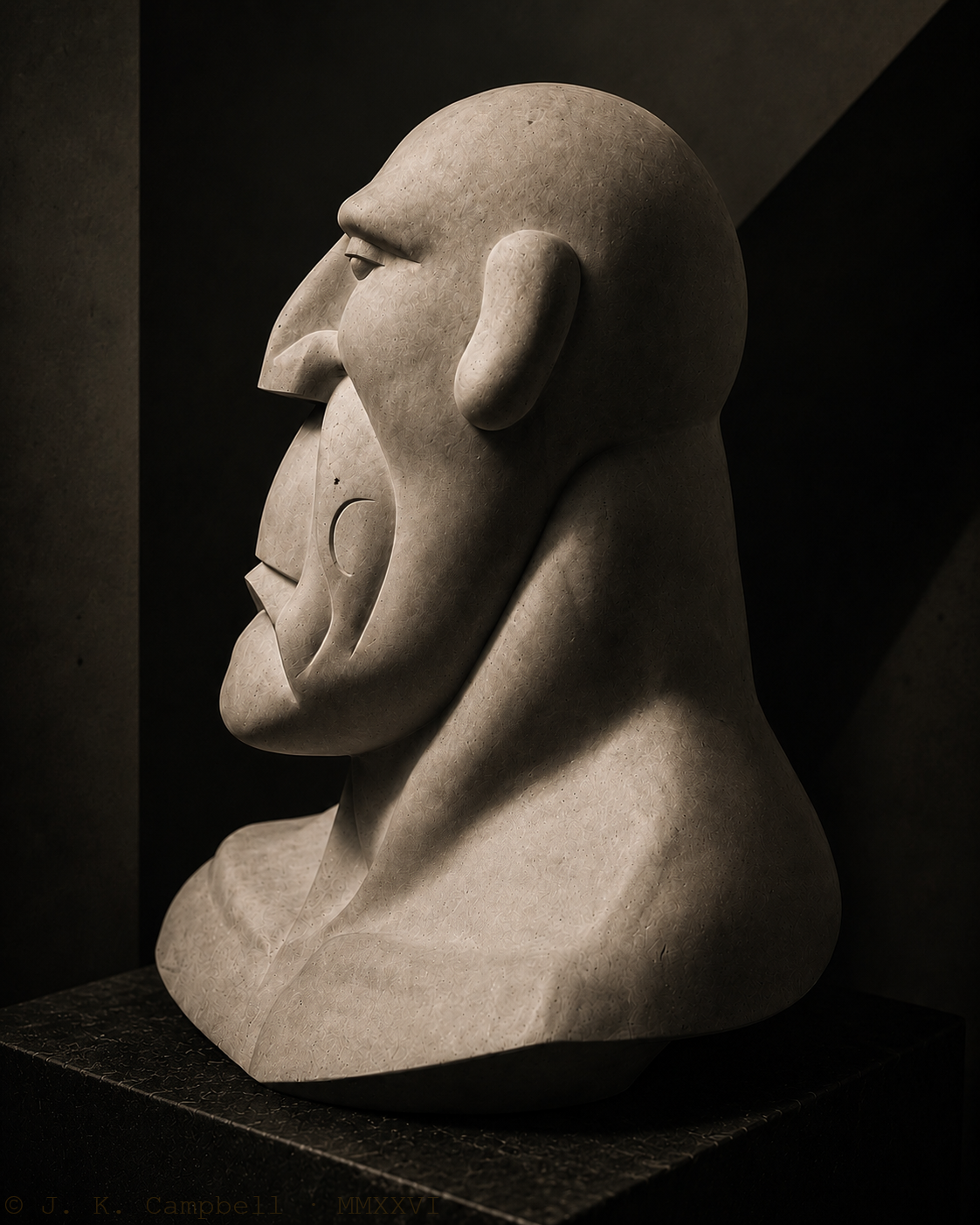
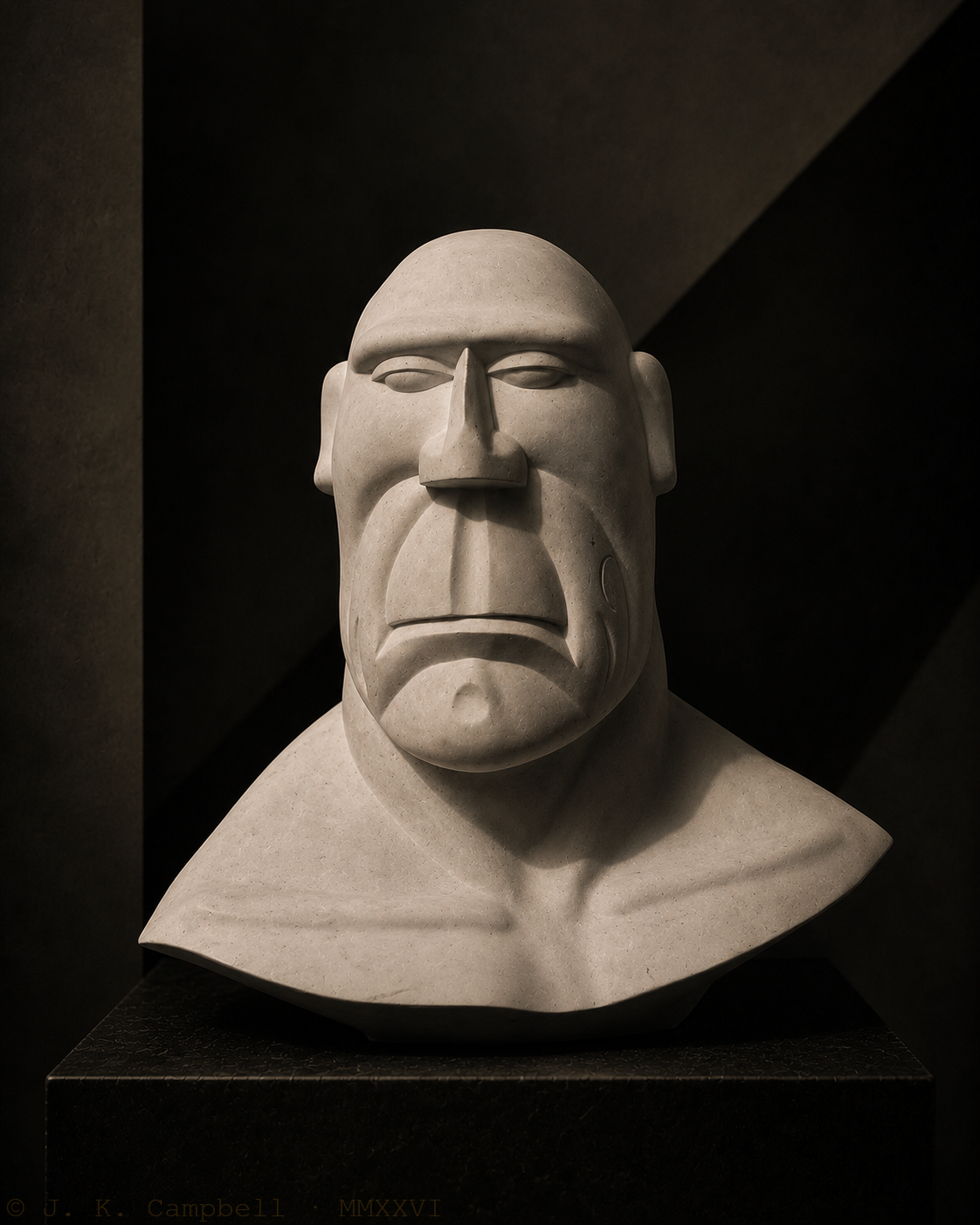
Fatneck sits somewhere between caricature, monument, and mask. At first glance the piece appears almost humorous — the exaggerated neck, the simplified cranial forms, the heavy compression of the features — yet the longer it is observed, the less comic it becomes. The sculpture begins to feel ceremonial, even architectural, as though the head has been reduced into essential structural masses rather than treated as portraiture in the traditional sense.
What gives the piece strength is its refusal to chase realism. The forms are aggressively simplified, but not careless. Large uninterrupted surfaces collide with abrupt geometric cuts, producing a tension between softness and force. The exaggerated neck and jaw create an unusual sense of load-bearing weight, as though the figure has been shaped by pressure, repetition, and endurance. In this respect, the work sits closer to monumental expressionist portraiture and severe civic sculpture than to conventional portraiture.
There is also a strange duality in the head, especially in profile. The figure appears stubborn, durable, and physically grounded, yet simultaneously detached and introspective. The eye is reduced almost to a slit beneath the brow ridge, producing a withdrawn internal quality rather than outward expression. This restraint keeps the exaggeration serious rather than comic.
The work functions especially well under cinematic lighting because the planes are clean and deliberate. Large areas of shadow allow the silhouette to dominate first before details slowly emerge. This gives the sculpture an almost archival or industrial-era photographic quality, particularly when treated in monochrome or warm desaturated tones.
The strongest aspect of the piece may be its restraint. Fatneck communicates identity and psychological weight with little descriptive detail. Mass, contour, and negative space carry the work rather than surface ornamentation.
For me, the piece also carries thoughts around labour and endurance — the private battles of monotonous work, day after day, often for poor reward. The monumentality is turned toward the ordinary grafter rather than the general, the statesman, or the heroic figure.
Conceptually, Fatneck can be read as a study of labour and endurance, a symbolic working-man archetype, an industrial mask, or simply as compressed human form under pressure. The sculpture does not over-explain itself. It leaves enough ambiguity for projection, and I hope that is part of what stays with the viewer after they have seen it.