BABYMAKER
Sculptor J. K. Campbell
Medium Bronze
Dimensions H 4ft × W 2ft × D 2.5ft
Date c. 2003
Edition Edition of 3
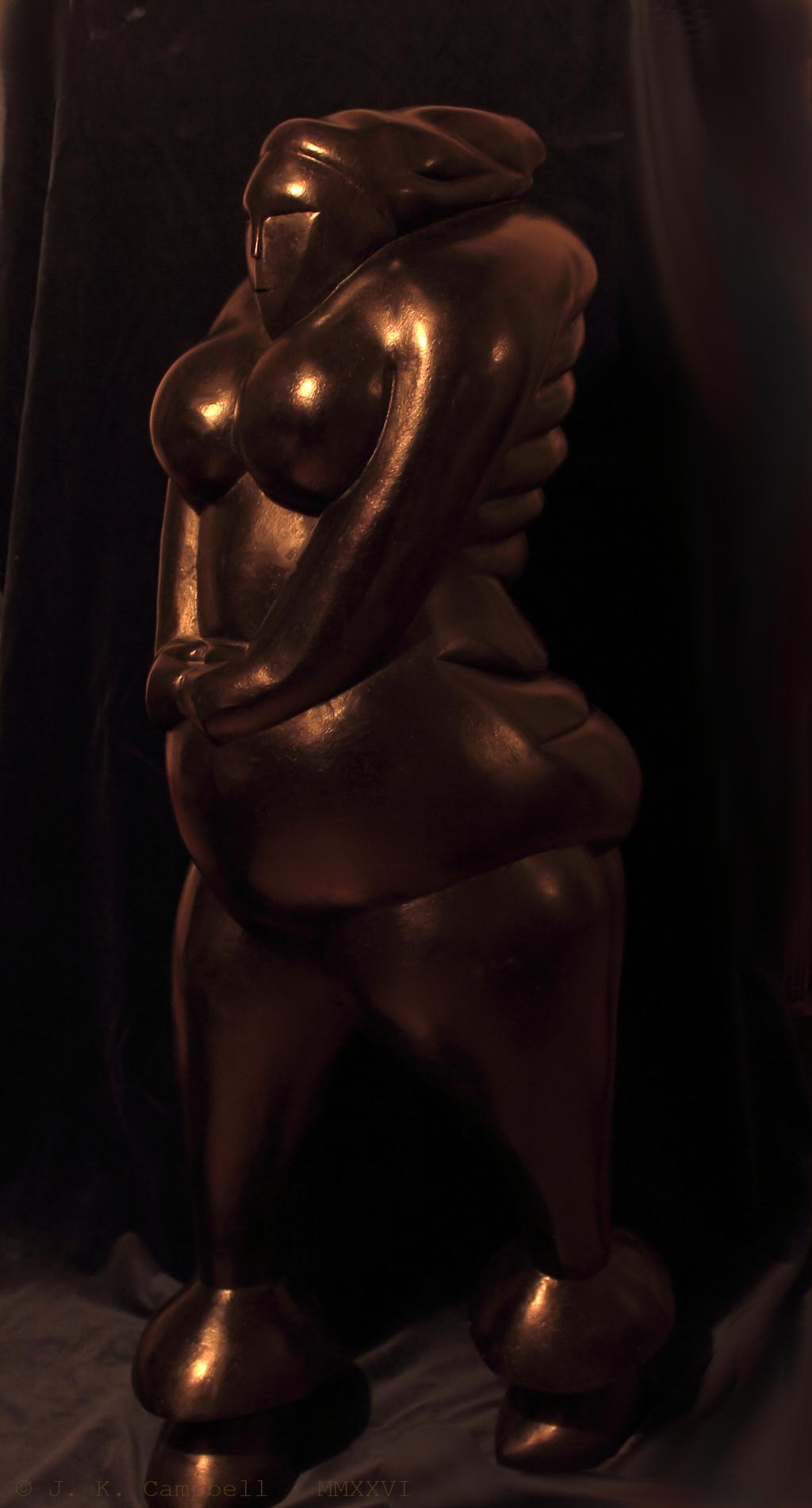
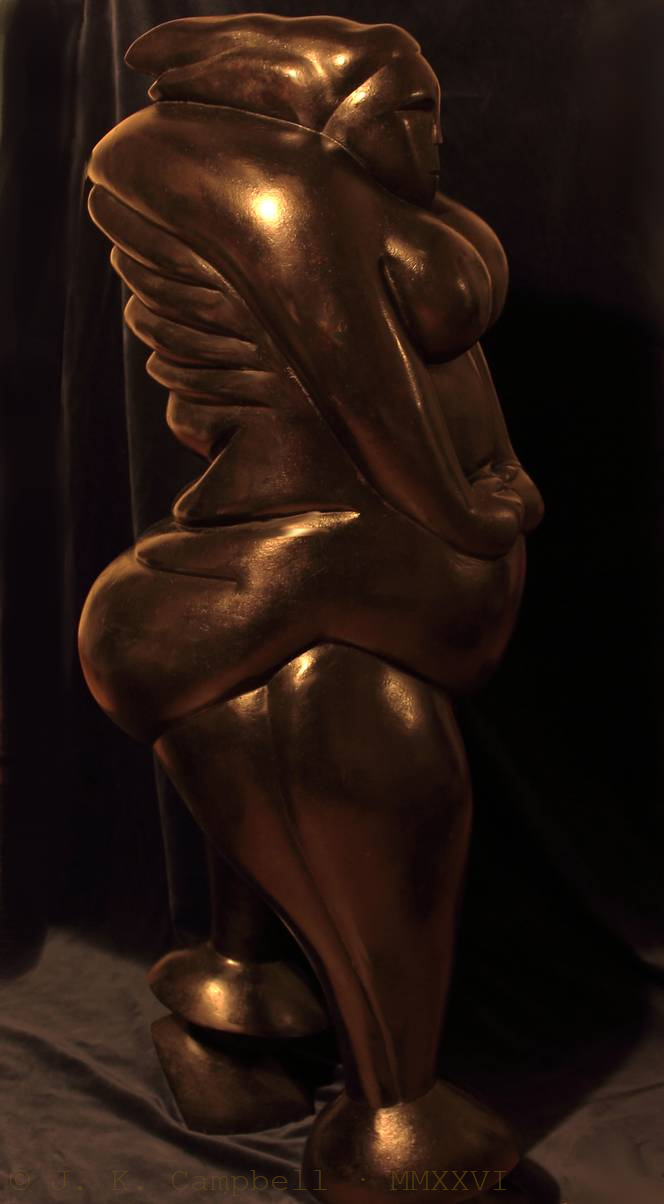
Babymaker is a bronze sculpture concerned with creation, fertility, and the ancient image of the mother. Standing at around four feet high, the work carries the presence of something older than portraiture: part earth figure, part idol, part surviving fragment of a forgotten ritual object. The title is deliberately blunt, almost crude, yet that directness gives the piece much of its force. It refuses to dress motherhood in polite language. Instead, it presents the mother as physical, generative, enduring, and elemental.
The sculpture draws quietly on the long human memory of mother figures — Mother Earth, Isis, Inanna, and the many unnamed women and goddesses through whom cultures have imagined life itself taking form. Yet Babymaker is not soft or sentimental. Its strength lies in the tension between fertility and severity. The body appears protective and abundant, but also marked by weight, pressure, and consequence. The figure seems to stride forward like a mother coming to scold her unruly children. Along the back, the jagged ridge rises like a bristling spine. It is not simply a wound or scar, but Mother Earth with her back up — angered by the behaviour of her current offspring, humanity.
There is something powerful in the way the work treats creation not as comfort, but as force. It hints at the old truth that destruction and renewal are not opposites, but parts of the same turning. Here, Mother Earth is not passive or endlessly forgiving; she appears as a force of judgement against humanity’s blatant disregard for the planet, against a world treated as little more than a resource to be drained for profit, along with the souls trapped within — and forced to serve — that ravenous insanity. Life does not move in a clean straight line; it coils, returns, breaks, reforms, and begins again. In that sense, Babymaker belongs to the spiral more than the circle: a motion of energy passing through matter, loss, birth, and return. In bronze, it has the feeling of an object built to endure — not merely as sculpture, but as a statement about origin, survival, and the difficult dignity of bringing life into a damaged world.